ABOUT US
The Mary Ward Charism
Five values. Four centuries. One enduring way of educating women for the world.
Mary Ward was a woman of deep faith who believed that education could change the world.
As an intelligent and spiritually gifted woman, she interpreted Scripture, the teachings of the Catholic Church, and her own spiritual insights through the lens of profound faith in the goodness of God.
These elements of the Mary Ward charism bring Gospel values to life in a Catholic Loreto way. They are not abstract principles - they are a living inheritance, expressed in the way Loreto schools teach, lead, and form community.

"From her writings and the example of her life, we have inherited five values that continue to shape every Loreto school in Australia today."
An inheritance for every generation
OUR VALUES
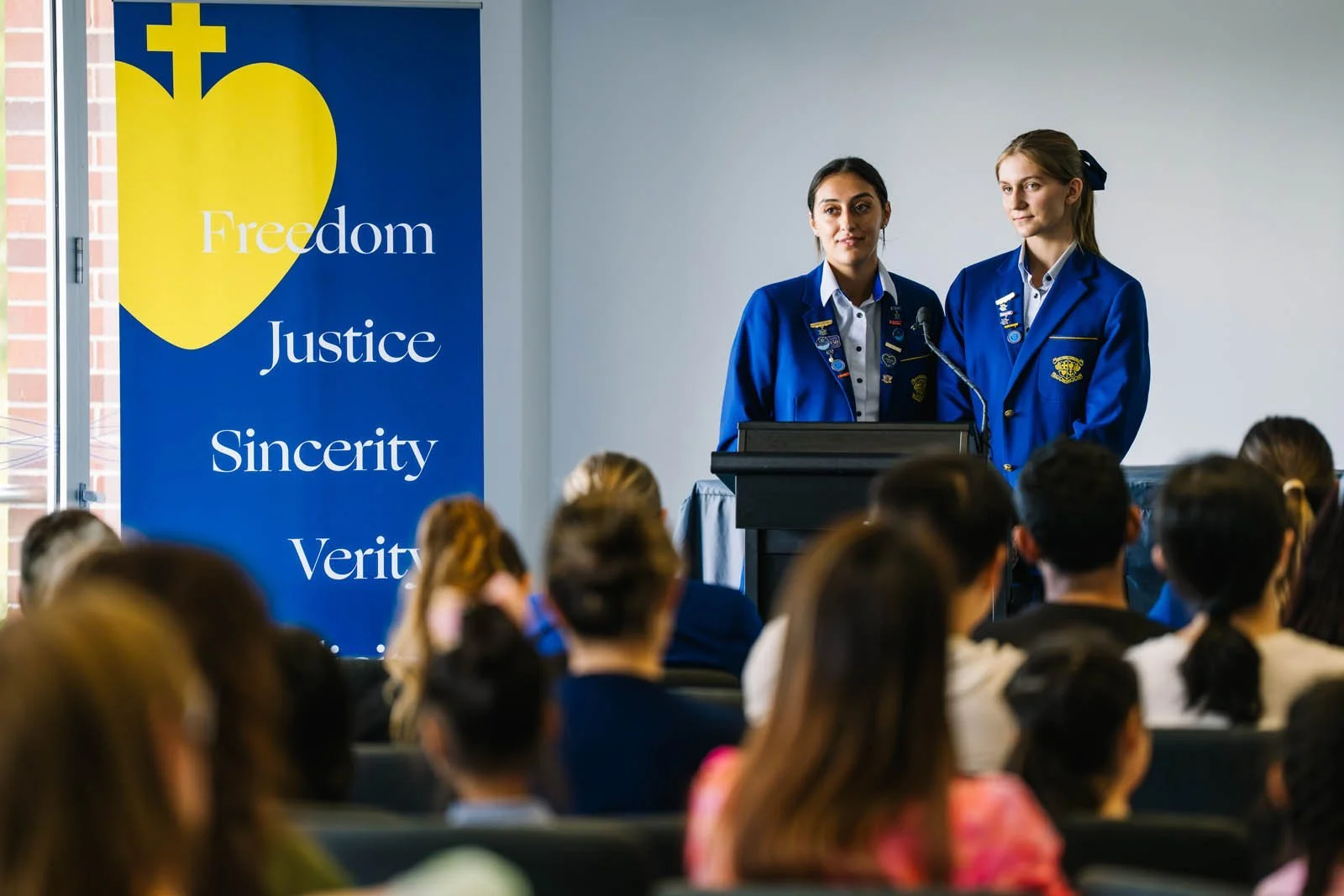
The five Mary Ward values are grounded in Gospel values and carry centuries of meaning. Together they form a coherent vision of what it means to be educated, to lead, and to live faithfully in the world.

Verity
Verity, in Mary Ward’s words, embodies integrity, particularly the profound truth of who we are and what gives meaning to our lives. This is centred fundamentally on the mystery of God. This Verity reflects the essential dignity of every human being, graced and loved by God: it challenges us to invest our everyday living with value and wholeheartedness, searching for what we know is right and important as people of God. Verity asks us to share our light with others and to provide leadership on the journey of life, as seekers of truth.
This is verity, to do what we have to do well.
(Mary Ward 1617)

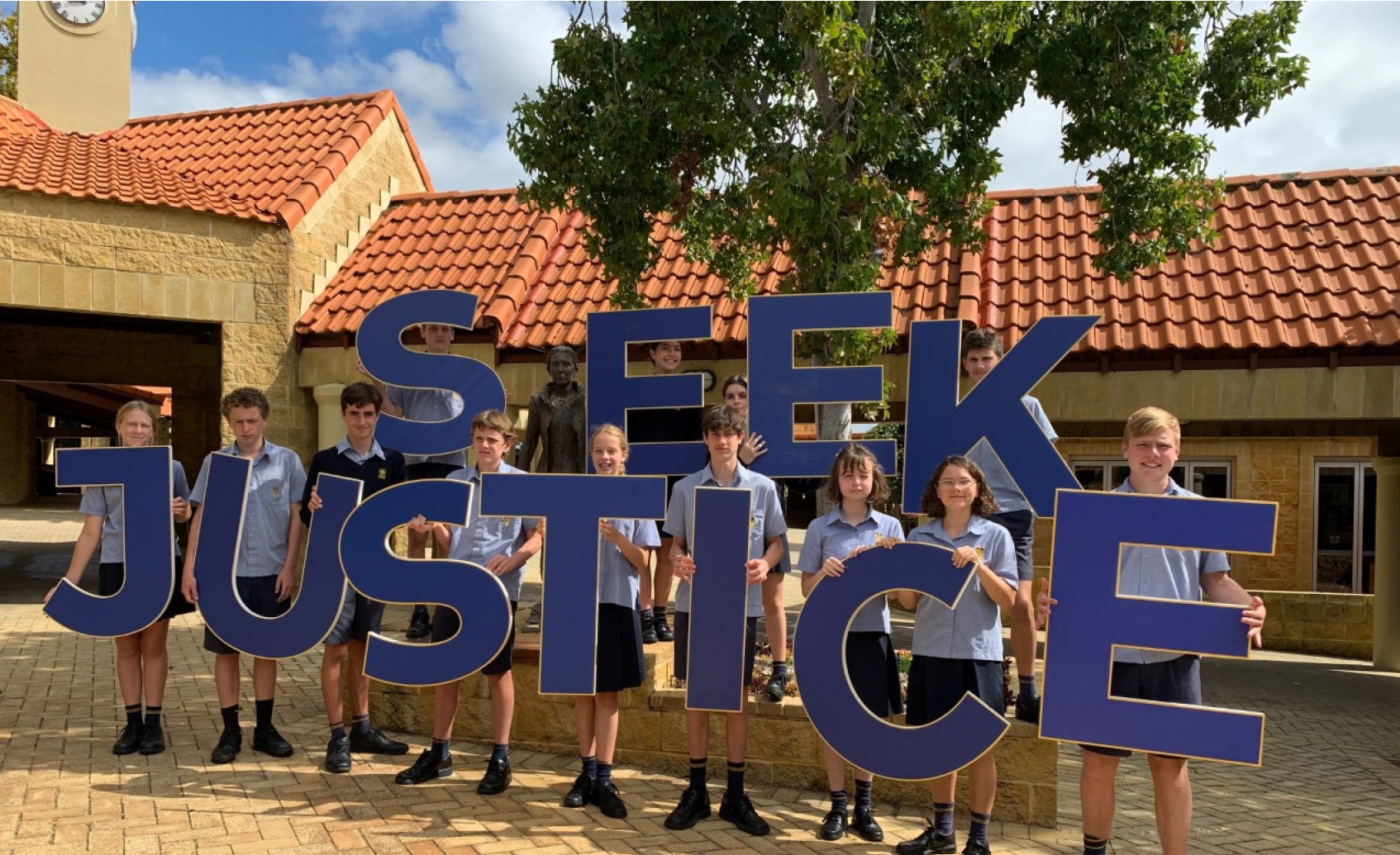
Justice
Justice, as Mary Ward describes it, involves personal integrity based on harmonious relationship with God, with other people and with the whole of creation. Informed by Catholic Social Teaching and the Gospels, Justice exists in the DNA of our Loreto identity. This commitment is expressed in works of justice and our active participation in bringing God’s kingdom to being in our world.
From an insight we call the ‘Just Soul’, Mary believed good works would flow from the person seeking right relationship, in the search for equality, the protection of human rights and the valuing of human dignity. Educating for Justice means helping people to recognise the inherent dignity of each individual and of the natural environment, and to become aware of the rights and responsibilities of all.
Be seekers of truth and doers of justice.
(Mary Ward Maxim)

Sincerity
Mary Ward’s ideal was that we examine our interior life and know ourselves as God knows us. Sincerity has the inner aspect of knowing one’s heart, the integrity which comes from reflection and self-knowledge, but also the requirement of speaking and acting the truth of God’s love. This sincerity calls us to live authentically, giving expression to our individual creation. Sincerity requires us to match word and deed and to reflect the truth of who we are called to be in our thoughts and actions.
We should be such as we appear and appear such as we are.
(Mary Ward 1615)

Freedom
Mary Ward’s understanding of Freedom was grounded in her sense of a personal relationship with God, and her belief that each one of us, in our ordinary experience of life, has access to God’s loving care. It is an inner freedom, accepting of self, open to others and trusting of life.
Whatever the limitations of our circumstances and our humanity, we are called to grow in this freedom beyond the narrowness of self-interest and the crippling of self-doubt. In the process we will be able to respond more creatively to the needs of others and develop resourcefulness in the face of difficulty.
Act not out of fear but solely from love because we are called by God to a vocation of love.
(Mary Ward Maxim)

Felicity
At the heart of Mary Ward’s spirituality was friendship with Jesus which gave meaning, inner peace, and real joy in life. This serenity, described as Felicity, is an attitude of mind and a disposition of the heart which manifests itself in a sense of joy and hope. To live with Felicity calls us to embrace optimism and positivity, whilst knowing that true happiness comes from recognising and understanding the complex richness of our inner life and our response to it. A lightness of spirit and a love of friendship marks Felicity as a unique virtue in our way of being.
Have a cheerful mind, a good understanding, and a great desire for virtue. Of these a cheerful heart is most essential.
(Mary Ward Maxim)
VALUE OF THE YEAR 2026
This year, Loreto schools reflect on Felicity
Each year, Loreto schools across Australia reflect deeply on one of the five Mary Ward values as a shared focus for learning, formation and community life.
In 2026, our attention turns to Felicity - finding meaning in purpose that inspired deep joy.
EDUCATING FOR SOCIAL JUSTICE
Justice is not an add-on.
It is the heart of our mission.
As described by Mary Ward, justice is rooted in personal integrity and in living in right relationship with God, with others, and with all of creation. It is made visible through works of justice and through active engagement in the struggle to create and sustain this harmony.
Integral to a Loreto education is forming global citizens who appreciate their responsibilities to each other, to the human community and the earth. Loreto schools educate to understand the causes of injustice and inequality and to empower young people to work actively to create a more humane, just and sustainable world.
As part of the international Mary Ward education network, Loreto schools in Australia demonstrate their commitment to social justice through integrated curriculum, service learning, advocacy initiatives, experiential learning and student leadership opportunities. These experiences encourage students to understand the causes of injustice and inequality and to take informed, compassionate action in response. In the Mary Ward tradition, justice is both studied and practised.
Loreto Province Australia & South East Asia Justice Priorities
The rights of women and children
The reality of human trafficking
Refugees and asylum seekers
Sustainable development and ecological justice
The rights of First Nations Peoples and national reconciliation